18 4th of July BBQ Party Food Ideas for a Backyard Cookout
1. Classic Smash Burgers with Special Sauce
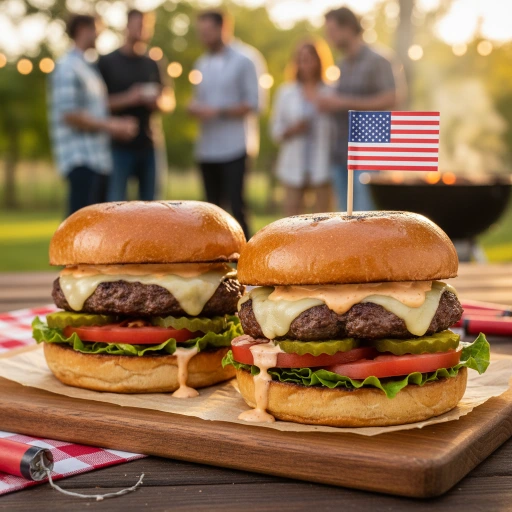
Classic smash burgers — thin, aggressively pressed beef patties whose direct contact with the blazing hot cast iron griddle or flat-top creates the specific Maillard reaction crust of deeply caramelized, lacey-edged, intensely flavored beef that no conventionally shaped burger can replicate through any other cooking method — served double-stacked on a toasted brioche bun with melted American cheese, a special sauce of mayo, ketchup, mustard, pickle relish, and hot sauce, crisp shredded lettuce, and a single tomato slice, are the 4th of July BBQ food that most spectacularly and most memorably delivers the specific combination of crispy, juicy, saucy, and completely indulgent burger eating pleasure that defines the American cookout at its most genuinely satisfying and its most honest celebration of what great backyard beef cooking actually tastes like when executed with proper technique and proper heat. The smash burger’s entire quality depends on two non-negotiable elements — an extremely hot cooking surface and extremely thin patties — whose combination creates the crust that conventional burger cooking cannot achieve.
Form the burger balls at precisely 2.5 ounces of 80/20 ground beef per patty — the higher fat content of 80/20 beef being specifically required for the fat-in-grease that creates the lacey, crispy-edged smash burger crust that leaner beef simply cannot generate because insufficient fat renders out of the patty during the high-heat smash. Heat the cast iron griddle or flat-top surface to its absolute maximum temperature for a minimum of ten minutes before beginning to cook — a surface that is insufficiently hot will steam rather than sear the patty, producing a grey, textureless beef disc rather than the deeply caramelized crust that the smash burger technique exists specifically to create. Place the beef ball on the surface and smash immediately and decisively with a heavy spatula or burger press — applying the full force of body weight through straight downward pressure rather than rocking pressure, in a single deliberate movement that flattens the ball to approximately four millimeters thickness within the first two seconds of surface contact before the exterior proteins have set enough to resist the compression. Apply the American cheese immediately after the flip and cover briefly with a dome lid to create the steam that melts the cheese to a perfectly glossy, completely uniform coating within thirty to forty-five seconds of cover application.
2. Slow-Smoked Baby Back Ribs
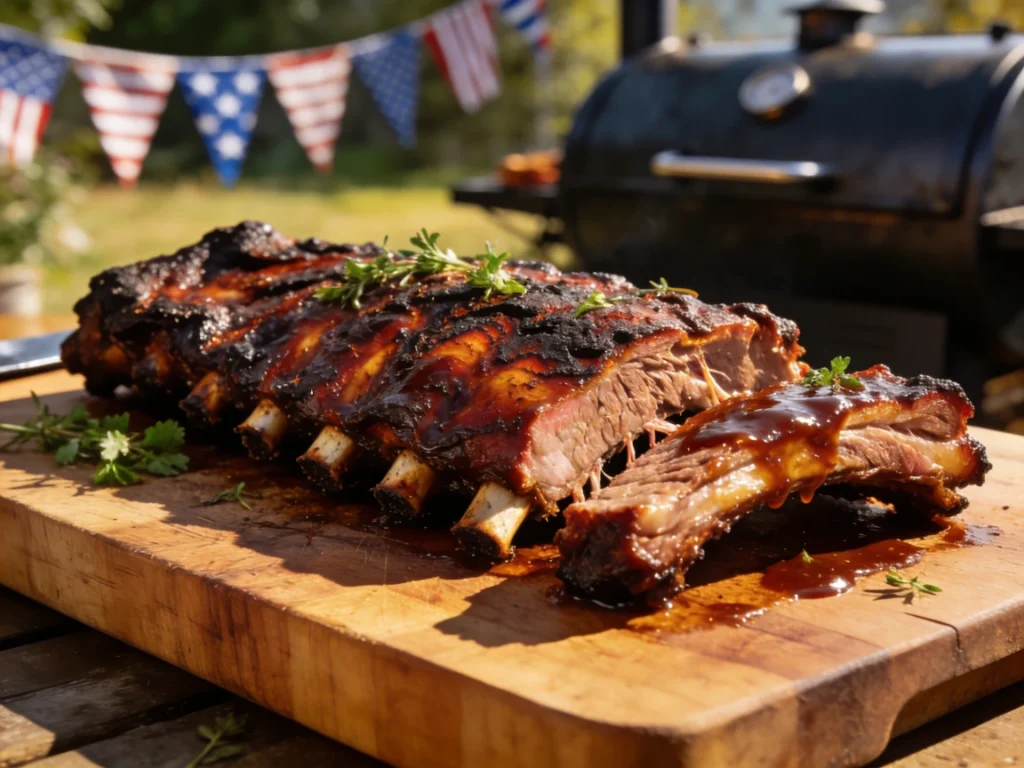
Slow-smoked baby back ribs — twelve-hour low-and-slow smoked over cherry and hickory wood at 225 degrees Fahrenheit until the meat has developed a deep mahogany bark of caramelized dry rub, the smoke ring penetrates a full quarter inch into the meat’s interior in the distinctive pink band that marks genuine smoke penetration rather than surface coloring, and the bones pull cleanly from the meat with a single deliberate pull that confirms the collagen has fully dissolved into gelatin without the over-softness of fall-off-the-bone meat that the competitive BBQ community correctly identifies as a sign of over-cooking rather than ideal doneness — are the 4th of July BBQ centerpiece that most genuinely demonstrates the specific patience, knowledge, and commitment to genuine craft that slow-smoked barbecue demands and rewards. Ribs done properly are genuinely extraordinary — their flavor complexity, their textural achievement, and their specific combination of bark, smoke, and tender meat creating an eating experience that nothing else in the backyard cooking repertoire can approach.
Remove the membrane from the bone-side of each rack before applying the dry rub — sliding a butter knife under the membrane’s edge, gripping with a paper towel for purchase on the slippery membrane surface, and pulling in a single smooth motion that removes the entire membrane in one piece rather than the frustrating sequential tearing of a membrane removed in small sections. Apply the dry rub generously — a mixture of brown sugar, smoked paprika, garlic powder, onion powder, black pepper, cumin, dried mustard, cayenne, and kosher salt — pressing it firmly into both surfaces of the rack with the flat of the hand rather than rubbing it in a grinding motion that disturbs rather than adheres the rub particles to the meat’s sticky surface. Manage the temperature of the smoker with genuine precision throughout the cook — maintaining a consistent 225 degrees rather than the temperature fluctuations that inattentive smoking produces, the temperature consistency being the single most important variable that separates a correctly smoked rack with uniform tenderness throughout from an incorrectly smoked rack whose hot spots have overcooked the thinner sections while the thicker sections remain underdone. Wrap the racks in butcher paper rather than aluminum foil at the point when the bark has set to the deep, dark, dry crust of a properly developed rub surface — the paper wrap allowing moisture exchange that maintains bark texture while the moisture of the rendering fat continues to braise the meat’s interior collagen toward its gelatin conversion.
3. Patriotic Potato Salad
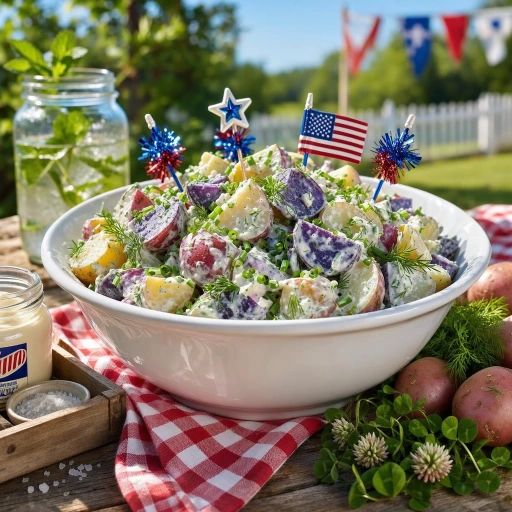
A patriotic potato salad made from three varieties of potato — red-skinned new potatoes for their vivid crimson exterior and buttery interior, white or yellow Yukon gold potatoes for their naturally creamy texture and rich flavor, and genuine blue or purple potatoes for the deep blue-violet skin and striking contrast — dressed in a well-seasoned creamy dressing of excellent mayonnaise, whole-grain Dijon mustard, apple cider vinegar, celery seed, fresh dill, chives, salt, and white pepper, is the 4th of July BBQ side dish that most cleverly and most deliciously incorporates the celebration’s patriotic color program into the gathering’s most essential and most universally beloved potato preparation, creating a potato salad whose visual impact — the vivid red, white, and blue of three distinct potato varieties mixed in the cream dressing — is as immediately impressive as its flavor quality. The three-potato patriotic salad achieves the rare distinction of being simultaneously a visual statement and a genuinely excellent potato salad whose flavor and texture quality would justify its preparation entirely independent of its patriotic color concept.
Cook each potato variety separately — the different starch contents and cooking times of the three varieties requiring individual attention to prevent the simultaneous overcooking of the faster-cooking red potatoes and undercooking of the denser blue varieties that a combined pot produces. Cut each variety into consistently sized pieces of approximately 2.5 centimeters — the consistency of size ensuring uniform cooking completion across all pieces and the moderate sizing providing the most pleasant eating proportion in a potato salad where oversized chunks create awkward bites and undersized pieces turn to mush in the dressing. Dress the potatoes while still slightly warm — the warm potato’s starch being in a more permeable state that allows the dressing’s vinegar and salt to penetrate into the potato’s interior rather than sitting as a surface coating on a cold potato’s closed cellular structure. Season the completed salad aggressively with salt and adjust the vinegar balance — potato salad requires noticeably more salt than other preparations because the starchy potato absorbs and neutralizes flavor, and the acid balance of the vinegar to mayo ratio determines whether the salad’s flavor profile reads as bright and alive or flat and heavy in the mouth.
4. Grilled Corn on the Cob with Flavored Butter
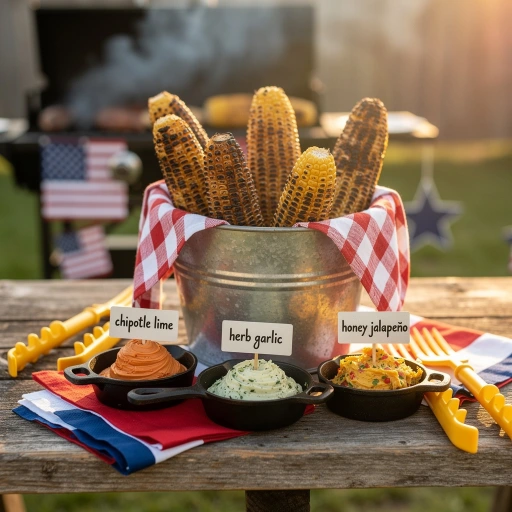
Grilled corn on the cob — ears of peak-season sweet corn grilled directly on the grill grate over direct high heat without husks, rotated every ninety seconds until the kernels develop the specific deep char spots of caramelized corn sugar while the surrounding uncharred kernels retain their explosive juiciness and sweetness — served with a selection of three handmade compound flavored butters in cast iron ramekins is the 4th of July BBQ side dish that most instantly and most universally represents the quintessential American summer eating experience in a single, perfect bite of charred, juicy, sweet corn with melting, flavored butter soaking into every charred surface and kernel crevice. Corn at its genuine peak of summer sweetness, grilled over genuine hardwood charcoal, and dressed with a thoughtfully made compound butter creates a flavor combination whose simplicity belies an extraordinary quality that the best cookout guests recognize and appreciate immediately and enthusiastically.
Source the corn from the most local and most recently harvested available supply — the sugar in sweet corn converting to starch from the moment of harvest at a rate that makes a corn purchased from a roadside farm stand on the morning of the cookout incomparably superior to supermarket corn that may have been harvested days earlier, the freshly harvested corn’s kernels bursting with the specific sweetness that its starch-converting sugars have not yet had the time to sacrifice to cellular metabolism. Prepare the chipotle lime compound butter by combining softened unsalted butter with finely minced chipotle peppers in adobo, fresh lime zest and juice, smoked paprika, honey, and flaky sea salt — the chipotle’s smoky heat and the lime’s bright acidity creating the most compelling and most requested of the three butter options at every summer cookout where this combination has been offered. Prepare the herb garlic butter with roasted rather than raw garlic — the roasted garlic’s sweet, mellow, slightly caramelized flavor being fundamentally more appropriate for a corn butter than the sharp, aggressive character of raw garlic whose potency overwhelms rather than complements the corn’s delicate sweetness. Grill the corn only after the larger proteins have been cooked and removed from the grill — the corn requiring the highest direct heat available from the fully developed charcoal bed that produces the specific kernel charring that distinguishes grilled from boiled or steamed corn.
5. Beer Can Chicken with Herb Crust
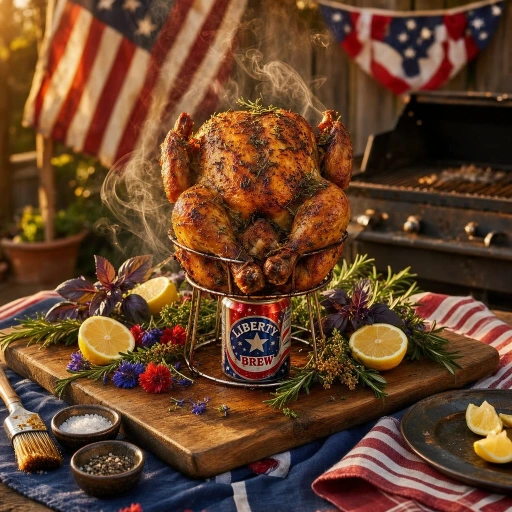
Beer can chicken — a whole chicken rubbed generously with a fresh herb and spice crust of chopped rosemary, thyme, garlic, smoked paprika, lemon zest, and flaky sea salt mixed into softened butter and applied both under and over the skin, then placed upright over an open can of cold beer that steams the interior with aromatic hop-scented moisture during the entire indirect cook while the exterior skin renders and crisps to a perfectly golden, herb-encrusted surface whose shattering crispness and herb-intensive flavor make the finished bird genuinely extraordinary — is the 4th of July BBQ showpiece that most theatrically and most impressively presents a single whole bird as a standing, self-basting, architecturally compelling piece of cookout theater whose cooking method generates as much conversation and as much genuine fascination from guests as its finished flavor generates genuine culinary admiration. The beer can chicken is the BBQ recipe that demonstrates both technical confidence and genuine flavor knowledge in a single, spectacular presentation.
Prepare the herb butter crust the day before the cookout — the extended overnight refrigeration allowing the butter to fully set against the chicken’s skin and allowing the salt’s penetration into the meat to create the flavor enhancement and moisture retention of a genuine overnight dry brine. Apply the butter rub beneath the skin as well as over it — carefully loosening the skin from the breast and thigh meat with fingers inserted through a small incision at the neck end, then working the butter rub directly against the meat’s surface beneath the skin for the flavor penetration and internal browning during cooking that surface-only application cannot achieve. Use a lager or light beer in the can rather than a heavily hopped IPA or a dark stout — the lighter beer’s steam carrying gentle hop and grain aromatics into the chicken’s interior cavity without the overwhelming bitterness that more aggressively hopped beer varieties can impart to the meat during the extended cooking period. Set up the grill for indirect cooking at 375 degrees Fahrenheit — placing the standing chicken over the unlit side of the grill and the lit coals or burners on the opposite side with a drip pan beneath the chicken to catch the rendered fat and the beer-enriched drippings that make the most extraordinarily flavored pan sauce for serving alongside the finished bird.
6. Loaded BBQ Baked Beans
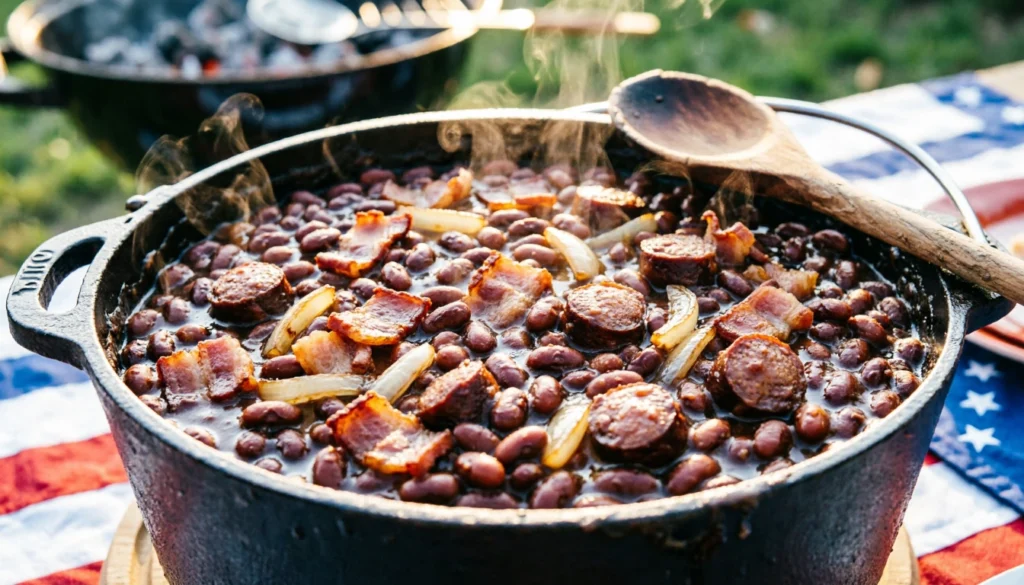
Loaded BBQ baked beans — navy beans slow-cooked in a deeply flavored braising liquid of dark molasses, brown sugar, apple cider vinegar, Dijon mustard, smoked paprika, Worcestershire sauce, chicken stock, and rendered bacon fat until the beans are completely tender and the sauce has reduced to a thick, glossy, intensely complex coating, loaded with crispy thick-cut bacon pieces, sweet caramelized onions, and chunks of smoked sausage distributed throughout — are the 4th of July BBQ side dish that most fundamentally and most essentially completes the outdoor cookout spread with the specifically American contribution of deeply sweet, smoky, long-cooked beans whose flavor complexity and comforting richness provide the perfect counterpoint to the brightness of the slaws, the freshness of the salads, and the direct protein intensity of the grilled meats surrounding them on the cookout table. Great baked beans are one of America’s most underappreciated culinary achievements — their apparent simplicity concealing a genuine depth of flavor development that requires genuine time and genuine technique to produce.
Start with dried navy beans rather than canned beans — soaking overnight in cold water with a small pinch of baking soda that softens the beans’ exterior more efficiently during the soaking period and reduces the cooking time required to achieve the complete interior tenderness that baked beans require for their finished texture. Render the bacon in the Dutch oven before building the sauce — cooking four to six strips of thick-cut bacon over medium heat until the fat has completely rendered and the bacon edges have crisped, then removing the bacon and building the entire sauce in the rendered fat that remains in the pot, whose flavor base the sauce absorbs from its initial construction throughout the entire extended cooking period. Add a smoked ham hock or smoked turkey leg to the beans during cooking — its collagen dissolving into the braising liquid over the extended cooking time and contributing the specific richness and depth that gelatin-enriched cooking liquids provide and that bean recipes cooked without a collagen-rich protein source consistently lack. Build genuine complexity in the sauce’s flavor profile by caramelizing the onions for twenty to twenty-five minutes before adding the other sauce components — the deeply caramelized onion’s sweet, nutty, Maillard reaction compounds providing a flavor foundation that raw or briefly sautéed onion cannot contribute in the finished beans’ overall flavor architecture.
7. Elote-Style Mexican Street Corn Salad
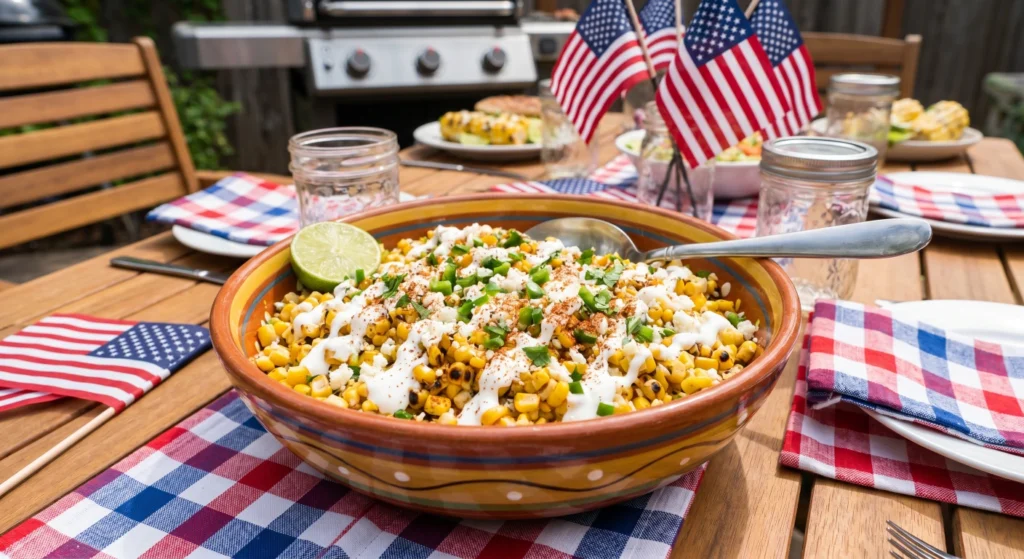
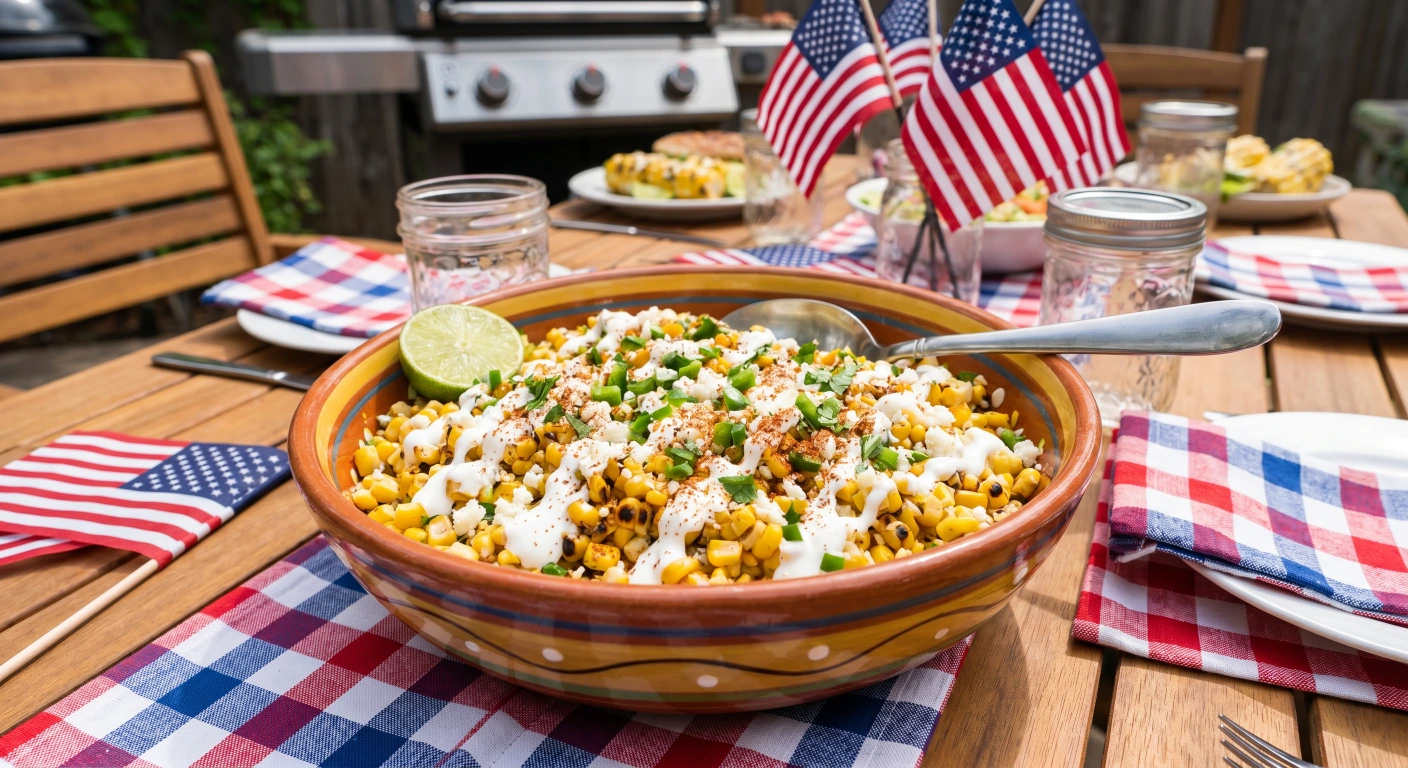
Elote-style Mexican street corn salad — fire-charred corn kernels cut from grilled cobs and tossed while still warm with Mexican crema, crumbled Cotija cheese, fresh lime juice and zest, ancho chili powder, a pinch of cayenne, diced fresh jalapeño, chopped fresh cilantro, and a small amount of mayo for the creamy binding that allows the seasonings to coat every kernel uniformly — is the 4th of July BBQ side dish that most boldly and most deliciously introduces the specifically Mexican-American culinary tradition of elote into the backyard cookout’s side dish program, creating a salad whose fire-charred corn, cream, chile, and lime flavor combination is simultaneously more complex, more interesting, and more genuinely crowd-pleasing than the traditional mayonnaise-dressed corn salad while honoring the same fundamental ingredient of peak-season corn in the format most appropriate for serving to a large gathering where eating corn directly from the cob would be impractical. This salad disappears faster from the cookout table than almost any other side dish at every gathering where it appears.
Char the corn kernels on the grill by positioning the husked cobs directly over the highest available heat — the cast iron grate’s radiant heat in combination with the charcoal’s direct flame contact creating the specific deep kernel char that gives the corn its caramelized sweetness and smoky complexity that oven-roasted corn approximates but never fully achieves. Cut the kernels from the cob using the specific technique that preserves the most kernel integrity — standing the cooled corn upright in a wide bowl and cutting downward with a sharp chef’s knife in long strokes that follow the cob’s slight curve rather than straight cuts that leave kernel rows attached to adjacent rows. Make the crema component from scratch if time allows — combining Mexican sour cream or crème fraîche with lime juice, salt, and a small amount of mayo for the specific combination of tang, richness, and binding capability that commercial bottled crema approximates less successfully than a freshly made version whose components are in the optimal proportions for this specific application. Source genuine Cotija cheese from a Mexican grocery or specialty food store rather than substituting with domestic feta or Parmesan — the Cotija’s specific crumbling texture, its specific milk-sweet and salt-sharp flavor profile, and its specific affinity for the corn-cream-lime-chili combination of elote being genuinely different from any substitution’s flavor contribution.
8. Tri-Tip Steak with Chimichurri
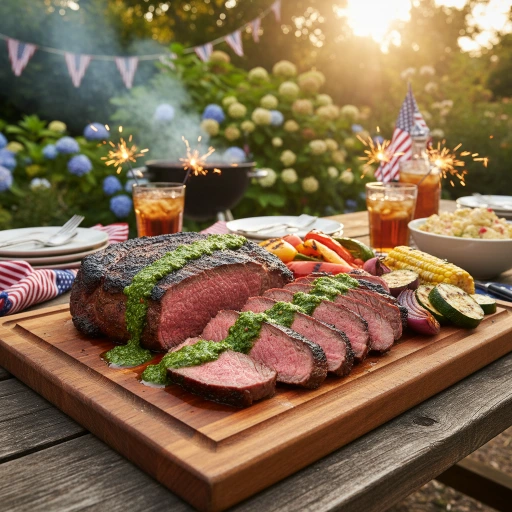
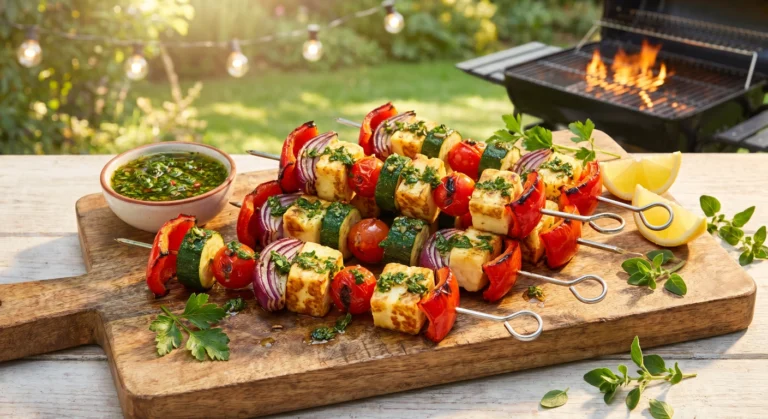
A tri-tip steak — the triangular bottom sirloin cut whose specific combination of beefy flavor intensity, satisfying chew, and affordability relative to premium steaks makes it the California barbecue tradition’s most celebrated and most underrated cut — dry-brined twenty-four hours in advance with kosher salt and coarse black pepper, grilled over two-zone heat to develop the deepest possible sear crust on the outside while maintaining a consistent medium-rare pink interior from edge to center, then rested for fifteen minutes before slicing thinly against the grain and served with a vibrant, freshly made Argentine chimichurri of flat-leaf parsley, fresh oregano, garlic, red wine vinegar, red pepper flakes, and excellent olive oil, is the 4th of July BBQ centerpiece protein that most impressively demonstrates the host’s specific grill knowledge and flavor sophistication through the selection of a genuinely excellent cut that most backyard cooks overlook in favor of the more familiar ribeye and strip steak cuts whose familiar names communicate quality less efficiently than the tri-tip’s exceptional eating quality does at first taste. The tri-tip sliced and sauced with chimichurri is genuinely extraordinary eating.
Understand the tri-tip’s specific grain structure before slicing — the muscle fibers running in two different directions across the cut’s triangular shape, creating a grain change at approximately the midpoint of the triangle that requires the slicer to re-orient their knife angle after completing the first half of the slices to ensure all cuts are made cleanly against the grain for the maximum tenderness that proper grain alignment provides. The slice angle against the grain is the single most important technical decision in tri-tip service — slices cut with rather than against the grain producing chewy, unsatisfying pieces whose long muscle fibers require more chewing than the cut’s inherent tenderness actually warrants. Develop the chimichurri from the freshest possible herbs — flat-leaf parsley and fresh oregano that have not been dried, wilted, or refrigerated long enough to have lost the volatile aromatic compounds in their fresh leaves that make chimichurri its specific, bright, grassy, vibrantly herb-forward flavor rather than the muted, slightly musty character of a chimichurri made from herbs past their peak freshness. Make the chimichurri at least two hours before service and allow it to stand at room temperature — the resting period allowing the vinegar to soften the garlic’s sharp edge, the oil to absorb the parsley’s chlorophyll compounds, and the salt to draw moisture from the herbs that creates the slightly brighter, more integrated flavor of a rested chimichurri compared to a freshly made one.
9. Watermelon and Feta Salad with Mint
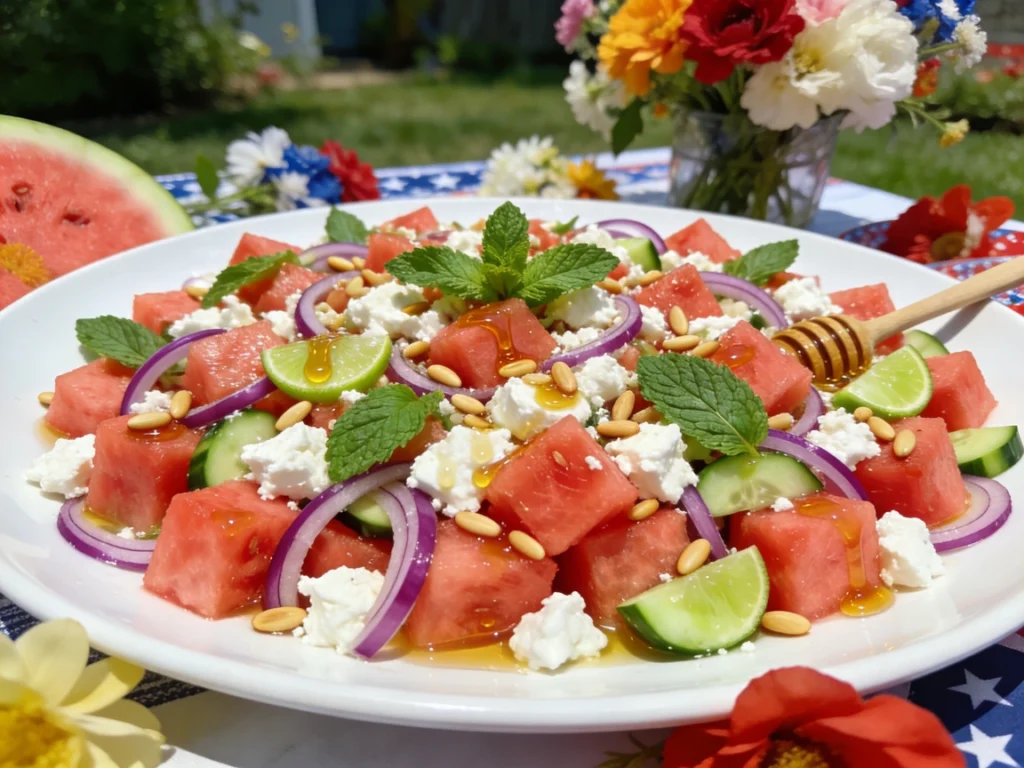
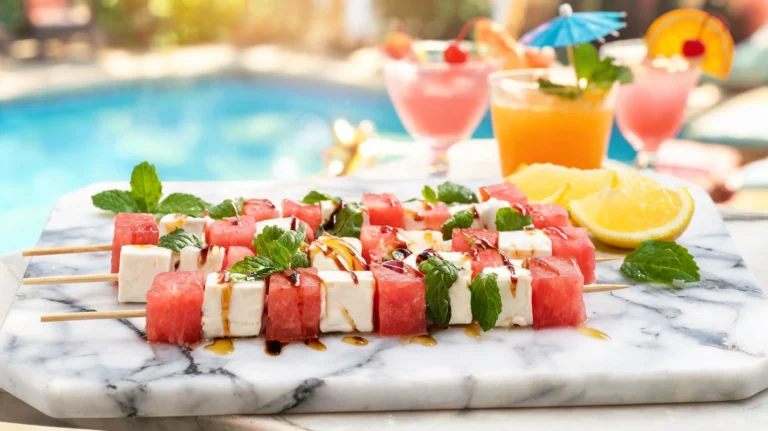
A watermelon and feta salad — large, cold cubes of peak-ripeness seedless watermelon arranged on a wide white platter with generously crumbled genuine Greek feta, fresh mint leaves torn from the stem rather than chopped to preserve their specific aromatic character, very thinly sliced red onion, crisp cucumber cut into half-moons, toasted pine nuts for warm nuttiness and textural contrast, and a simple honey-lime vinaigrette drizzled across the entire surface immediately before service — is the 4th of July BBQ side dish that most refreshingly and most colorfully provides the specific counterpoint of cold, juicy sweetness and creamy saltiness that the cookout spread most needs after the richness of the smoked meats, the heaviness of the baked beans, and the fat content of the burgers that anchor the main course. The watermelon salad is the dish that makes every other dish on the cookout table taste better by refreshing the palate between bites of richer, more intensely flavored foods.
Select the watermelon at genuine peak ripeness using the most reliable available physical indicators — the underside spot where the watermelon rested on the ground during growing should be creamy yellow rather than white or green, indicating that the watermelon remained on the vine long enough for its sugars to develop fully. Cut the watermelon into genuinely large cubes — a minimum of 4 centimeters per side — rather than the smaller pieces that most salad recipes specify, for the specific eating pleasure of a large, juicy watermelon piece that provides a genuinely refreshing mouthful rather than the multiple small pieces whose combined eating experience lacks the watermelon’s characteristic explosion of cold juice and sweet flesh. Keep the watermelon pieces extremely cold until the final moment of plating — the temperature contrast between the cold fruit and the ambient summer heat being a significant and genuine part of the salad’s pleasure at an outdoor summer cookout. Use genuine Greek feta packed in brine — its specific creamy-salty-mineral flavor combination being fundamentally more appropriate for this salad than the pre-crumbled domestic alternatives whose drier texture and sharper, less complex saltiness creates a different and less satisfying flavor pairing with the sweet watermelon.
10. Grilled Shrimp Skewers with Garlic Butter
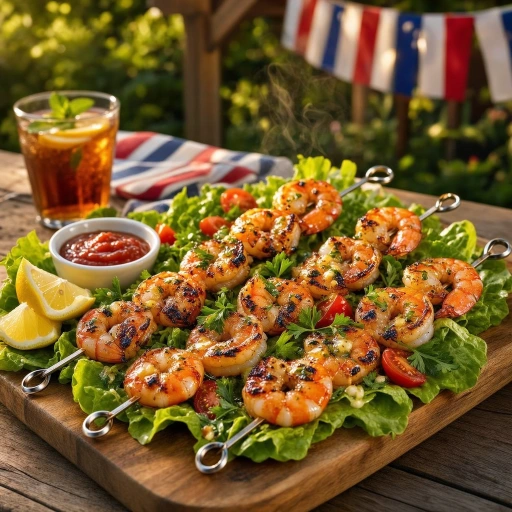
Grilled shrimp skewers — large tiger or jumbo shrimp marinated in olive oil, garlic, lemon zest, smoked paprika, salt, and a pinch of cayenne for thirty minutes before threading on metal skewers in a single layer that ensures uniform cooking contact with the grill grate, then grilled over direct high heat for two to three minutes per side until the shrimp have developed a light char and have turned from translucent to opaque throughout, then immediately brushed with a generous amount of compound garlic herb butter the moment they come off the grill — are the 4th of July BBQ protein that most quickly and most reliably impresses guests with a genuinely excellent product delivered in the most time-efficient cooking process available in the backyard cookout context. Shrimp are the BBQ protein that rewards the combination of good sourcing and correct technique most immediately and most dramatically — excellent shrimp cooked properly for the right amount of time producing a result of extraordinary pleasure, while poor quality shrimp or overcooked quality shrimp producing identical disappointment regardless of the marinade or sauce applied.
Source the shrimp from the freshest available supply — ideally from a fish market with same-day or next-day delivery of fresh-caught product rather than the previously frozen, previously thawed shrimp that most supermarkets sell as the standard product in their seafood case. If fresh shrimp are unavailable, choose individually quick-frozen shrimp still in their original frozen state rather than previously thawed supermarket shrimp — the thawing process having already begun the quality degradation that makes a genuinely fresh frozen shrimp superior to one that has been thawed, held, and potentially re-frozen in the retail supply chain. Use metal skewers rather than wooden — the metal’s heat conduction warming the skewer’s interior and contributing additional heat to the shrimp’s thicker segments from within while the grill’s direct heat cooks the exterior, and the metal’s rigidity making the turning of loaded skewers significantly more controlled and more precise than the flexibility of wooden skewers under the weight of multiple large shrimp. Make the garlic herb butter in advance — combining softened unsalted butter with roasted garlic, fresh parsley, lemon zest, a small amount of Dijon mustard, salt, and cracked pepper, rolling it into a log in plastic wrap and refrigerating until service — for the immediate, clean application to the hot shrimp that produces the most glistening, most flavorful, and most beautiful finished presentation.
11. Smoked Mac and Cheese
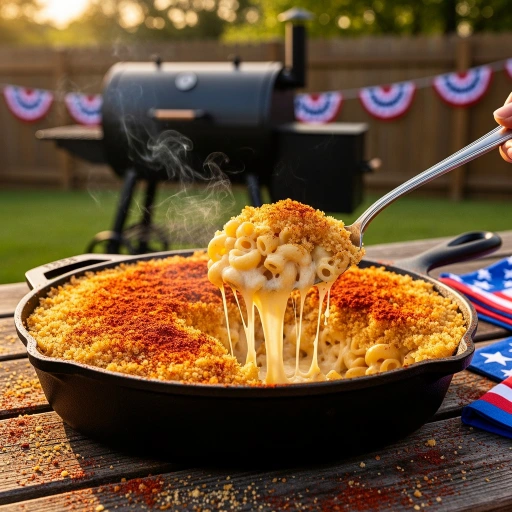
Smoked mac and cheese — a cast iron skillet of scratch-made mac and cheese with a bechamel-based sauce loaded with sharp cheddar, smoked gouda, and cream cheese, the pasta coated in the thick, creamy sauce and topped with a buttered panko breadcrumb crust, then placed in the smoker alongside the ribs for forty-five minutes to an hour where the cheese sauce absorbs the smoker’s hickory or cherry wood smoke and the breadcrumb crust develops its golden, crispy top — is the 4th of July BBQ side dish that most spectacularly and most unexpectedly elevates the most beloved American comfort food into the specific flavor territory of smoked BBQ cooking, creating the genuinely extraordinary combination of creamy, cheesy, smoke-perfumed pasta whose flavor sits at the extraordinary intersection of the American BBQ tradition and the American comfort food tradition simultaneously. Smoked mac and cheese is the cookout side dish that generates more genuine conversation, more recipe requests, and more sincere compliments than any other non-meat item on the BBQ spread.
Build the cheese sauce from a genuine bechamel — cooking equal weights of unsalted butter and all-purpose flour together for two minutes to cook out the raw flour character before whisking in whole milk gradually, then adding the cheeses in stages after removing from the heat to prevent the fat separation that high-heat cheese addition causes. Use a combination of sharp cheddar, smoked gouda, and cream cheese in the proportions of sixty percent cheddar for flavor intensity, thirty percent smoked gouda for additional smoke contribution and smooth melting quality, and ten percent cream cheese for the specific rich creaminess that cream cheese contributes to a sauce without its own distinct flavor character overwhelming the primary cheese notes. Cook the pasta to a full two minutes less than the package’s specified al dente time — the pasta will continue cooking in the smoker’s heat and the hot cheese sauce for the duration of its time in the smoker, and pasta started at true al dente will overcook to mush during this additional cooking time. Apply the buttered panko topping generously and evenly — tossing the panko with melted butter, smoked paprika, garlic powder, and grated Parmesan before applying in a thick, even layer that browns uniformly during smoking rather than the uneven browning of insufficiently buttered or unevenly distributed breadcrumbs.
12. Grilled Pineapple and Jalapeño Salsa
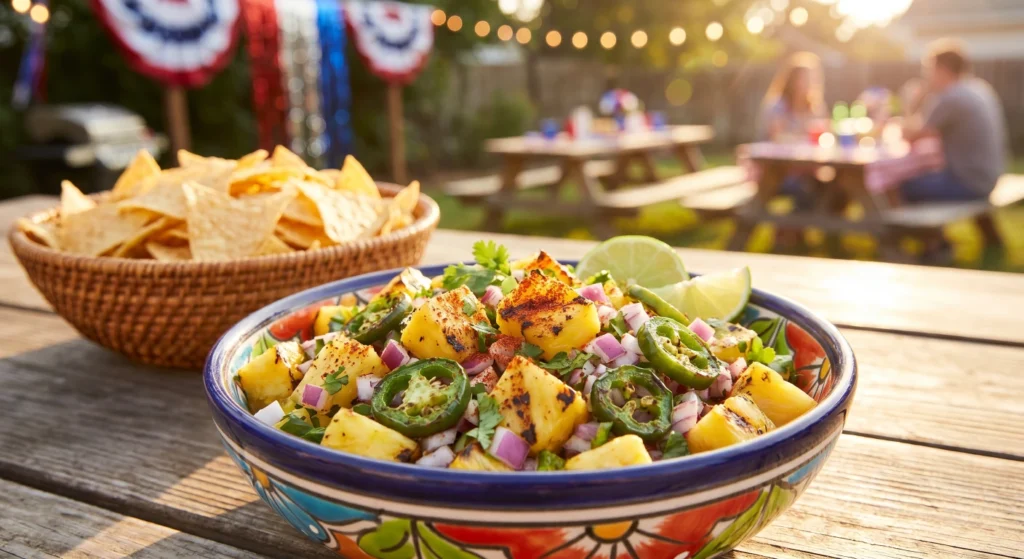
Grilled pineapple and jalapeño salsa — thick-cut fresh pineapple rings grilled over direct high heat until the natural sugars caramelize to a deep amber surface with distinct grill marks, then diced into small pieces and combined while still warm with fire-roasted jalapeño, diced red onion, fresh cilantro, fresh lime juice, and a pinch of ancho chili powder for a salsa whose specific combination of grilled tropical sweetness, fire-roasted heat, bright acidity, and fresh herb creates the most dynamically complex and most refreshingly unexpected flavor experience available at the 4th of July cookout table — is the perfect accompaniment for the grilled shrimp, the tri-tip, and the beer can chicken while simultaneously serving as the most crowd-pleasing and most conversation-generating chip dip at the snack table throughout the party’s gathering phase. The grilled pineapple salsa introduces the specific depth of caramelized, fire-touched pineapple that fresh pineapple salsa lacks — the grill’s heat concentrating the pineapple’s sugars, removing excess moisture, and creating the caramelized flavor compounds that give grilled fruit its extraordinary flavor complexity.
Select a pineapple at genuine peak ripeness — its base fragrance intensely sweet and pineapple-characteristic rather than the faint, barely-there fragrance of an unripe fruit, its skin predominantly golden-yellow rather than predominantly green, and its central spine leaves pulling free with the gentle resistance of a ripe fruit rather than the firm resistance of an unripe one. Cut the pineapple into rings of at least 1.5 centimeters thickness — the thicker ring providing sufficient structural integrity to survive the high-heat direct grill contact without the disintegration that thinner pineapple slices undergo when their moisture content rapidly evaporates during grilling and their cellular structure loses the turgidity that holds the thin slice together as a single piece. Roast the jalapeños directly on the grill grate — turning every sixty seconds until the skin is blistered and blackened on all surfaces, then placing in a covered bowl for five minutes before peeling, seeding, and dicing for the roasted jalapeño flavor that has a fundamentally more complex, more smoky, and more deeply chile-flavored character than raw jalapeño in any salsa application.
13. Classic Coleslaw with Apple Cider Vinegar Dressing
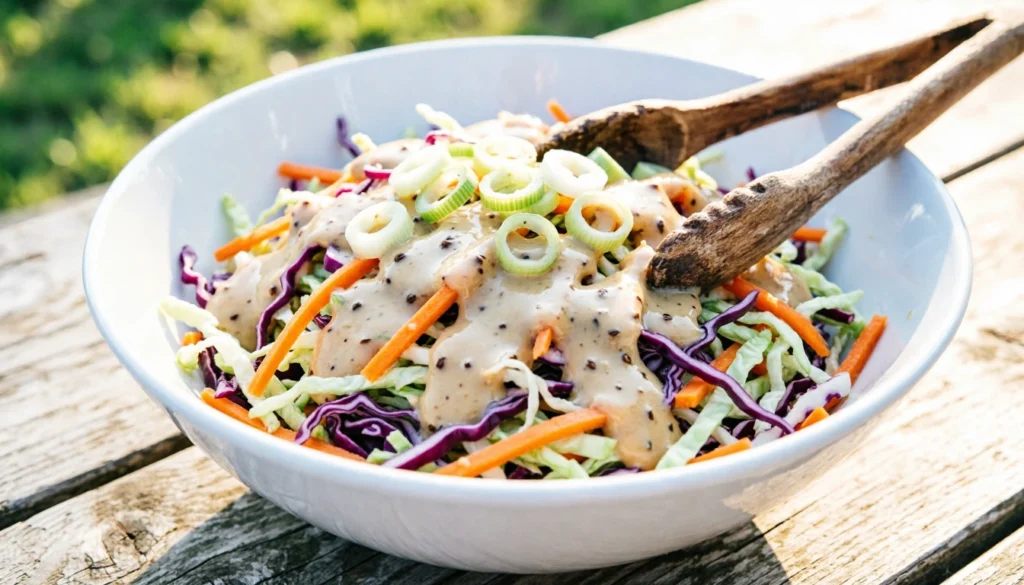
A classic coleslaw dressed with a balance of creamy mayonnaise and bright apple cider vinegar — shredded green and red cabbage, julienned carrots, and thinly sliced scallions dressed in a dressing of genuine quality mayonnaise, apple cider vinegar, a small amount of sugar, celery seed, whole-grain Dijon mustard, salt, and white pepper, allowed to marinate for a minimum of two hours before service so the salt in the dressing has time to draw moisture from the cabbage, slightly soften its raw crunch to the specific tender-crisp texture of a properly marinated slaw, and allow the dressing flavors to integrate from their initially disparate components into the cohesive, balanced flavor of a finished coleslaw — is the 4th of July BBQ side dish that most essentially and most practically completes the cookout spread by providing the bright, acidic, creamy counterpoint that every piece of rich smoked and grilled meat genuinely requires to be eaten with maximum pleasure and maximum flavor contrast. Great coleslaw is one of the most important and most consistently underestimated elements of any BBQ spread.
Salt the shredded cabbage before dressing — tossing the shredded cabbage with a generous pinch of kosher salt and allowing it to stand in a colander for thirty minutes, then rinsing briefly and squeezing out the excess moisture in a clean kitchen towel — for the specific texture improvement of pre-salted cabbage whose cellular walls have been partially softened by the osmotic moisture extraction, creating the tender-crisp texture of a properly made coleslaw rather than the raw, fibrous crunch of unsalted cabbage dressed and served immediately. Taste the dressing before applying it to the cabbage and adjust every component to the most perfectly balanced version achievable from the specific ingredients available — the sugar quantity being the most variable element that requires individual calibration to the specific acidity of the batch of apple cider vinegar being used, which varies noticeably between brands and even between batches of the same brand. Add the celery seed as the dressing’s most distinctive aromatic component — its specific warm, slightly bitter, intensely celery-characteristic flavor being the single element most immediately identifiable to anyone who has eaten a genuinely excellent American coleslaw and who recognizes its presence as the marker of a carefully made rather than carelessly assembled slaw recipe.
14. Grilled Hot Dogs with Gourmet Toppings Bar
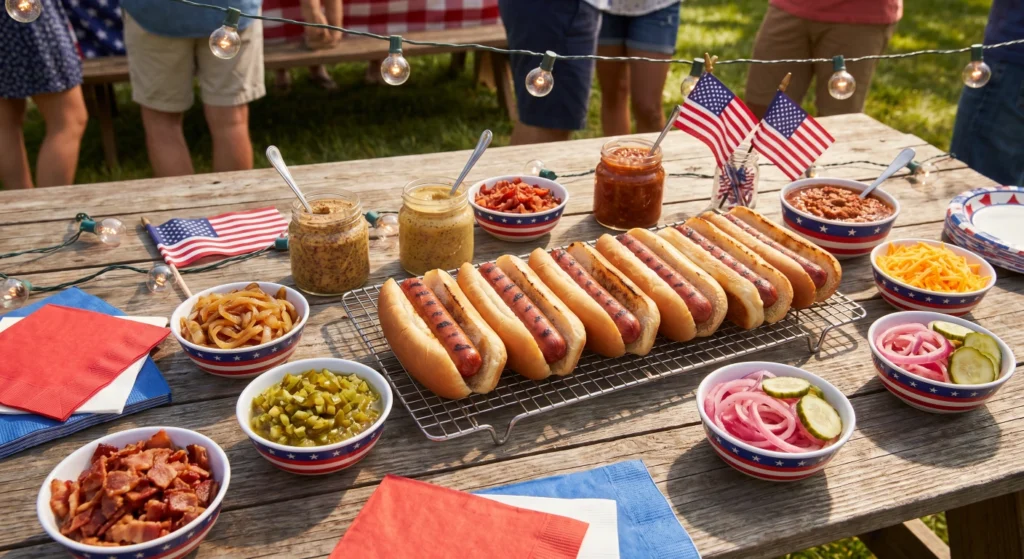
Perfectly charred hot dogs served in toasted potato rolls with a gourmet toppings bar offering six to eight genuinely excellent topping choices — homemade caramelized onions slow-cooked in butter and thyme for forty minutes until golden and jammy, a jalapeño and green tomato relish made from fire-roasted vegetables with a touch of lime, thick-cut bacon crumbles for smokiness and crunch, a selection of specialty mustards including whole-grain Dijon and spicy brown, a simple chili made from scratch with ground beef and warm spices, sharp cheddar shredded from a block at the time of service rather than purchased pre-shredded, and house-made bread and butter pickles for sweet-sour crunch — is the 4th of July BBQ food that most democratically, most practically, and most joyfully serves the full demographic range of the cookout gathering, from the youngest children whose preference for the simple combination of a hot dog, ketchup, and plain yellow mustard is both genuine and culturally valid to the adult guests whose enthusiasm for loading a hot dog with as many premium toppings as the bun can structurally support is equally genuine and equally valid.
Grill the hot dogs specifically rather than boiling or steaming them — the direct grill contact creating the specific charred, slightly split skin that gives a properly grilled hot dog its characteristic crisp exterior and the specific flavor complexity of caramelized beef casing that makes a grilled hot dog categorically different from a steamed one. Create the caramelized onion topping with the patience that genuine caramelization requires — forty to forty-five minutes of slow cooking over medium-low heat in butter with a pinch of salt, stirring every five to seven minutes rather than the continuous stirring that prevents browning, for the deep golden, completely soft, intensely sweet, and slightly sticky onion that has genuinely undergone caramelization rather than the pale, barely softened onion of a ten-minute sauté that well-intentioned but time-pressed cooks frequently offer as a substitute. Toast the hot dog buns on the grill grate — cut side down for sixty to ninety seconds until golden and slightly charred — for the specific structural improvement and flavor enhancement of a toasted bun that holds the toppings more effectively and contributes a toasty, buttery flavor dimension to the complete hot dog experience.
15. Red White and Blue Deviled Egg Potato Skins
Red, white, and blue loaded potato skins — baked potato halves with crispy, oil-rubbed skins and a creamy interior filling inspired by the deviled egg, made from the scooped potato mixed with cream cheese, sour cream, Dijon mustard, chives, and salt, piped back into the crispy skins and garnished with the patriotic color trio of red smoked paprika and diced pimiento, white sour cream rosette, and crumbled blue cheese — are the 4th of July BBQ side dish that most creatively and most practically combines two of the most universally beloved American party foods — the deviled egg and the potato skin — into a single hybrid preparation whose patriotic garnish makes it the most visually distinctive and most conversation-generating food presentation on the entire BBQ spread. The potato skin’s structural integrity as a twice-baked preparation makes it ideal for outdoor party service — its crispy shell maintaining structural integrity at room temperature significantly longer than the conventional deviled egg’s fragile halved-white presentation.
Bake the potatoes at 400 degrees Fahrenheit for sixty to seventy minutes until completely tender throughout — testing doneness by squeezing the potato through a kitchen towel rather than piercing with a skewer, which tests only the outermost flesh layer rather than the potato’s complete interior. Rub the potato skins generously with olive oil and flaky sea salt before the initial baking — the oil facilitating the Maillard reaction on the skin’s exterior during baking and creating the specific crispness that distinguishes a genuinely excellent baked potato skin from the soft, barely browned skin of an unbasted potato. Create the filling mixture at the correct consistency for piping — using a potato ricer rather than a mixer to incorporate the cream cheese and sour cream into the scooped potato flesh, as the ricer’s mechanical action breaks the potato starch granules without the over-activation that a mixer causes, maintaining the filling’s light, slightly fluffy texture rather than the gluey, gummy consistency of over-mixed mashed potato. Pipe the filling using a large star tip for the decorative surface texture that holds the patriotic garnishes in position while communicating the care and presentation investment that elevates a simple loaded potato skin into a specifically considered and specifically designed party food.
16. Strawberry Shortcake Skewers
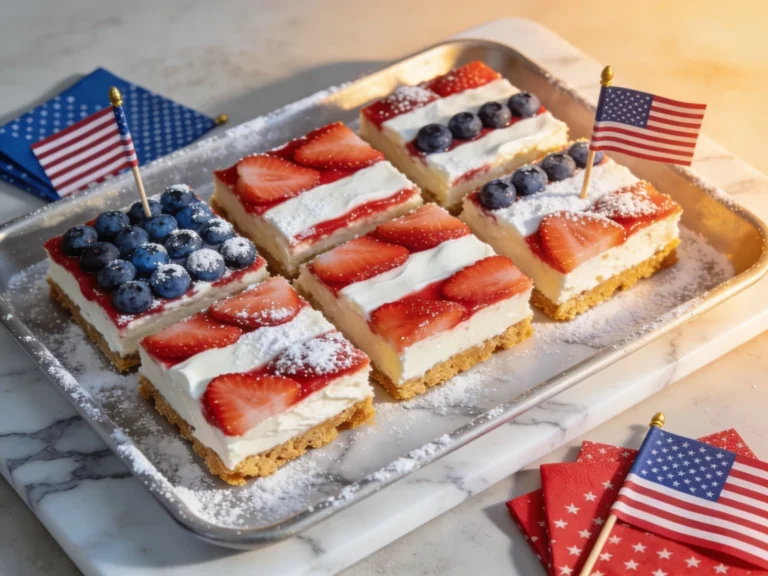
Strawberry shortcake skewers — long wooden dessert skewers threaded alternately with fresh strawberry halves, cubed pound cake or angel food cake, and firm whipped cream balls frozen to a specific consistency that allows them to be threaded on the skewer and hold their shape at room temperature for the duration of the party’s dessert service without the collapse that room-temperature fresh whipped cream undergoes — are the 4th of July BBQ dessert that most cleverly converts the classic American summer dessert combination into a self-contained, no-utensil, individually portioned party format that provides the complete strawberry shortcake experience in a single, skewered, hand-held serving whose patriotic red and white color scheme makes it the perfect visual finale to the cookout’s complete patriotic food program. The shortcake skewer solves the fundamental outdoor party dessert challenge of serving a cream-based dessert in conditions that cream’s temperature sensitivity makes challenging — by pre-setting the whipped cream on the skewer before service and keeping the assembled skewers refrigerated until the serving moment.
Make the whipped cream for skewering with a small addition of unflavored powdered gelatin — blooming one-quarter teaspoon of powdered gelatin in one tablespoon of cold water, heating briefly to dissolve, then whisking into heavy cream before whipping — for the stabilized whipped cream that holds its piped and threaded shape at ambient summer temperatures for a significantly longer period than unstabilized whipped cream, which collapses to a liquid state within thirty minutes of leaving refrigeration in July outdoor temperatures. Form the whipped cream into compact balls for threading using a small melon baller or a well-chilled tablespoon measure — working quickly with cold hands and cold tools to prevent the heat transfer from hands to cream that initiates melting and shape loss before the skewer can be returned to refrigeration. Macerate the strawberries in a small amount of sugar and balsamic vinegar for thirty minutes before threading — the maceration drawing moisture from the berries, concentrating their flavor, and creating the specific bright-sweet-sour quality of macerated strawberries that fresh unstinted berries lack even at their peak ripeness.
17. Grilled Peach and Arugula Salad
A grilled peach and arugula salad — halved fresh peaches grilled cut-side down over direct heat until deep char marks develop and the sugars caramelize to a warm amber sweetness, arranged over a generous bed of fresh peppery arugula with shaved Parmesan, house-made candied pecans, thinly sliced red onion, and a honey balsamic reduction drizzle — is the 4th of July BBQ salad that most elegantly and most seasonally elevates the cookout’s side salad program into genuinely sophisticated culinary territory, providing a composed salad of genuine beauty and genuine flavor complexity that complements the heavy smoked and grilled proteins with the specific combination of fruity sweetness, peppery green bitterness, creamy cheese, and honeyed acidity that creates a genuinely satisfying side dish experience rather than the obligatory salad presence that merely balances the protein-heavy cookout menu without making a genuine positive contribution to the meal’s overall pleasure. Grilled peaches in this salad will be the most frequently complimented element of the entire cookout spread.
Select peaches that are ripe but firm — the specific stage of ripeness at which the peach’s sugar content has developed to maximum sweetness while the cellular structure retains sufficient turgidity for the fruit to maintain its shape through the grill’s direct heat contact without the collapsing dissolution that an over-ripe peach undergoes when its water-engorged cellular walls are exposed to high-temperature cooking. Brush the cut surface of each peach half with a thin layer of neutral oil rather than olive oil or butter — the oil facilitating clean contact between the cut surface and the grill grate without the burning that butter undergoes at grilling temperatures and without the flavor competition that olive oil’s assertive character creates with the peach’s delicate sweetness. Make the candied pecans from scratch specifically for this salad — tossing pecan halves in egg white, brown sugar, cinnamon, cayenne, and salt before baking at 160 degrees Celsius for twenty minutes until the sugar has caramelized and dried to a crispy, shatteringly crunchy coating whose specific combination of sweet, warm spice, and slight heat creates the most compelling textural and flavor contrast to the grilled peach and arugula in the assembled salad.
18. Homemade Lemonade Bar
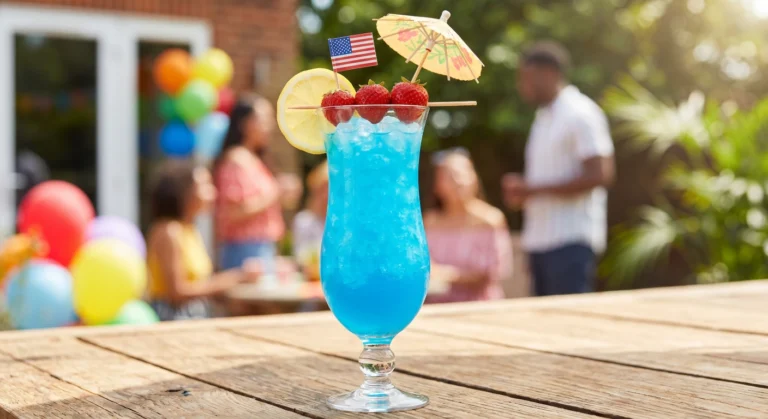
A homemade lemonade bar — three large glass drink dispensers filled with classic fresh-squeezed lemonade, strawberry basil lemonade, and lavender honey lemonade, accompanied by individual flavoring stations where guests can add house-made herb simple syrups, fresh fruit purees, or sparkling water to customize their own signature lemonade combination, finished with star-shaped ice cubes from patriotic silicone molds, red and white striped paper straws, and a garnish selection of fresh lemon wheels, strawberries, lavender sprigs, and mint — is the 4th of July BBQ non-alcoholic beverage centerpiece that most generously and most creatively serves the complete guest demographic of the cookout simultaneously, from children who want the classic sweetness of traditional lemonade to adults who prefer the sophisticated complexity of herb-infused or fruit-layered variations to guests who want the effervescence of sparkling water cut into their lemonade for a homemade sparkling citrus beverage experience. The lemonade bar is the cookout’s most refreshing contribution to the celebration’s complete sensory experience in July heat.
Squeeze the lemons fresh rather than using bottled lemon juice — the specific aromatic compounds of the lemon’s volatile oils, released during fresh squeezing and absent from bottled juice whose processing and pasteurization destroy them, being the component that most distinguishes genuinely fresh-made lemonade from the reconstituted product and that generates the immediate, recognizable response of “this tastes homemade” from guests who taste genuinely fresh lemonade against the commercial baseline. Make the simple syrup with a 1:1 ratio of sugar to water — heating just until the sugar fully dissolves, removing from heat immediately, and cooling completely before combining with the lemon juice and water — for the clean, pure sweetness of a properly made simple syrup that dissolves uniformly through the lemonade without the graininess of undissolved granulated sugar. Develop the lavender simple syrup by adding two tablespoons of dried culinary lavender to the hot sugar-water mixture and steeping for fifteen minutes before straining — the steeping time calibrated to extract the lavender’s floral, slightly herbaceous aromatics without the soapy quality that over-steeped lavender imparts to any preparation that exceeds its optimal extraction time.